
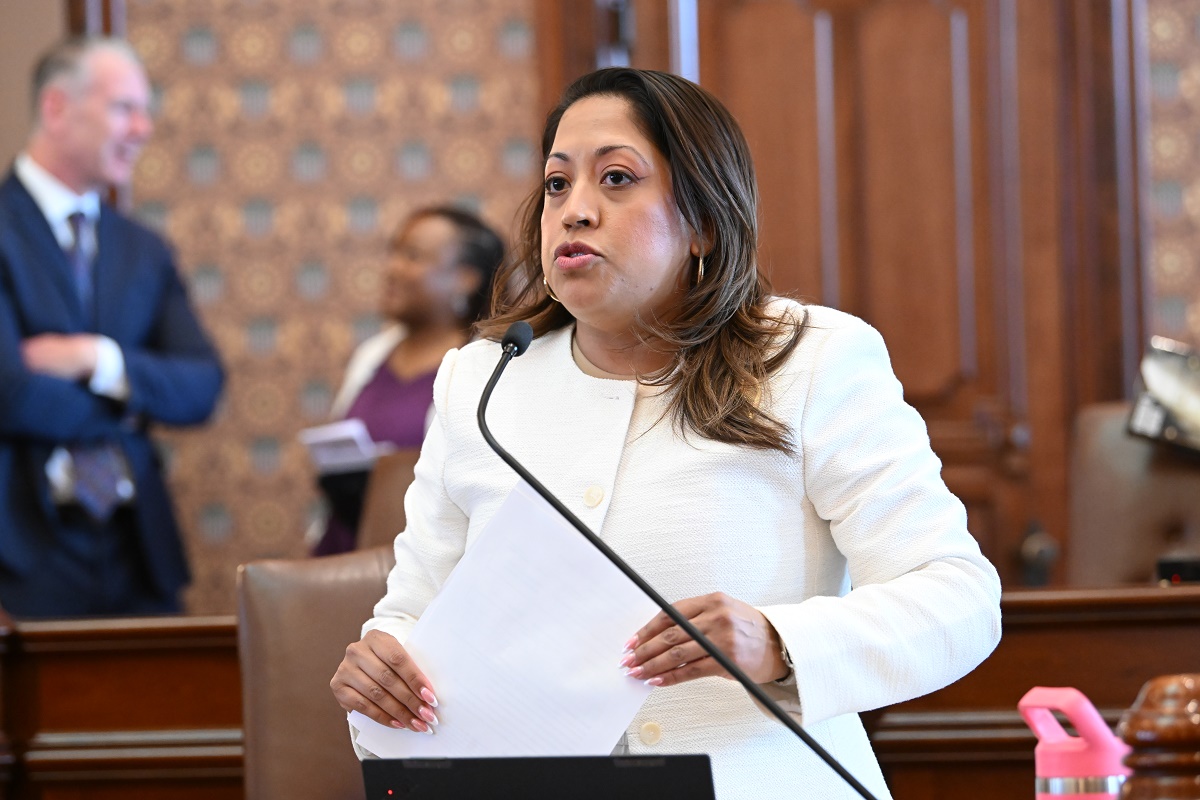
 SPRINGFIELD – State Senator Celina Villanueva has sent a strategic approach to addressing domestic violence, sexual violence, stalking and human trafficking to the governor’s desk, advancing the Family Center Justice Act out of the Senate Saturday.
“For many people who have experienced violence, accessing services is a daunting task, often overwhelming for survivors who need assistance with a range of needs or traumas,” said Villanueva (D-Chicago). “The Family Center Justice Act would help close these gaps in care, ensuring the state, local governments and nonprofits work together to support survivors and provide them with adequate resources.”
A Family Justice Center is a multi-agency, multi-disciplinary service center where public and private agencies assign staff members on a full-time or part-time basis to provide services to survivors of domestic violence, sexual violence, stalking and human trafficking. These centers increase access to services for survivors and their children by reducing the number of times survivors must repeat their accounts and the number of places survivors must go for help. The goal is to ensure families have comprehensive support in one centralized location.
Villanueva’s measure would create the Family Justice Center Act, which would allow the state, local governments and nonprofits to establish a multi-agency center to coordinate trauma-informed services and support for survivors. In recent years, Illinois has experienced an upward trend in domestic violence incidents, including increased contacts to the Illinois Domestic Violence Hotline – rising 140% from 2019 to 2024 – and higher rates of domestic-related homicides. Villanueva stressed that the rising rate of reports, coupled with the reality that many incidents go unreported, demonstrates a need for state response.
“Survivors have communicated what they need, and now it’s time for the state to deliver,” said Villanueva. “We have an opportunity to ensure residents in Illinois, especially women and children, have access to convenient, streamlined and trauma-informed care that can adapt to each individual’s needs.”
House Bill 4949 passed the Senate Saturday and heads to the governor for further consideration.